
Mother’s Little Helper, 2026
Relief is a very powerful door.

“Mother needs something today to calm her down…” -- The Rolling Stones, 1966
That line has been stuck in my head since the weekend, which is funny because I wasn’t listening to the Rolling Stones, I was watching March Madness. Elite 8, close games, the kind where you half watch, half check your phone, half think about something else, and somewhere in there I started noticing the ads.
Not one AI ad. Not two. Almost all of them.
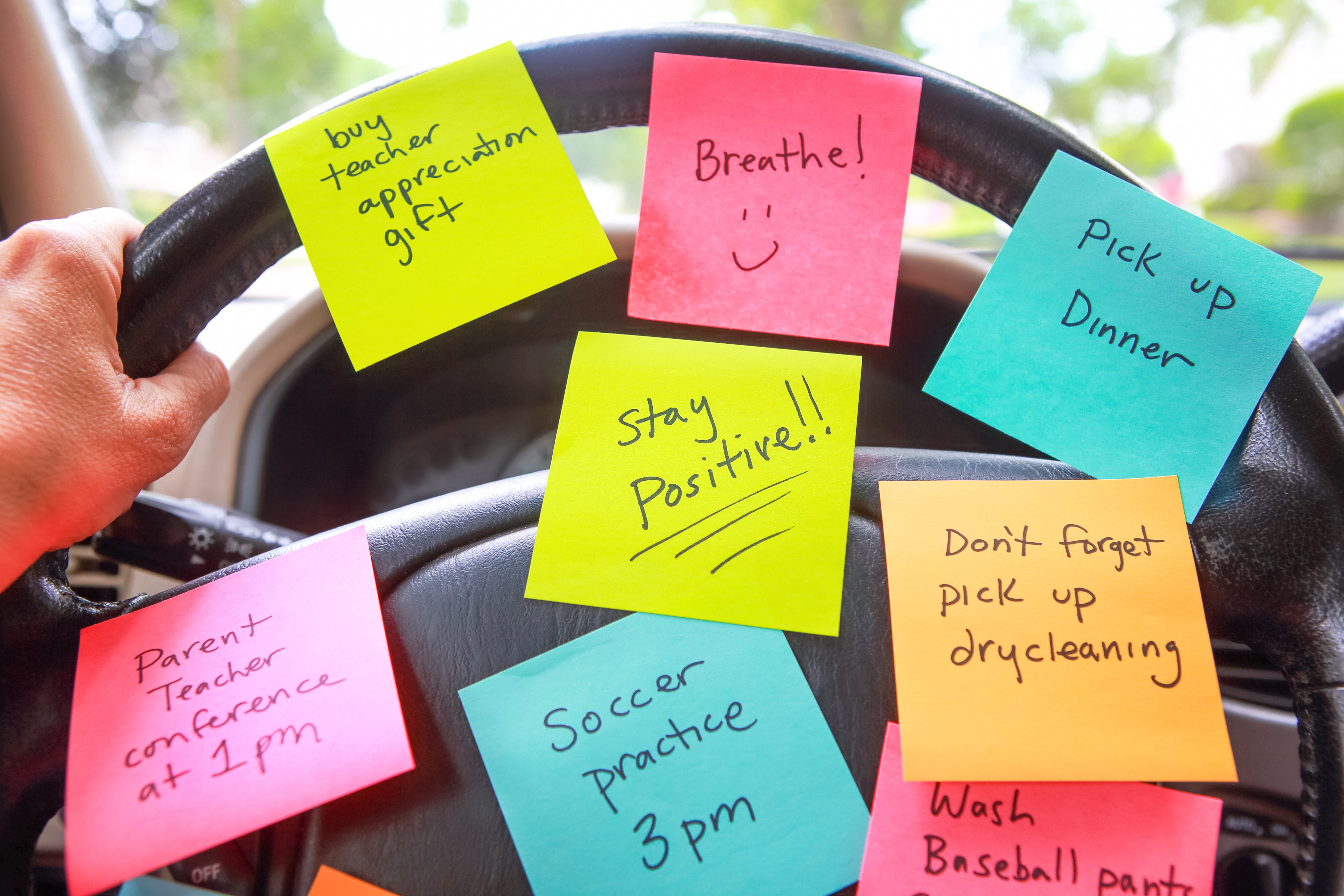
And not abstract, futuristic AI either. Not robots or sci-fi or anything like that. These were very domestic ads, very practical ads, very calm, reassuring ads. The kind that show a kitchen counter with stacks of paper and a woman taking screenshots of emails, schedules, sign-up sheets, practice times, school announcements, and dropping all of it into an AI tool that would organize everything into one clean document and automatically connect it to her calendar.
And I remember thinking, honestly, that’s kind of brilliant.
Because if you’ve ever run a household or been close to someone who does, you know that the logistics alone can feel like managing a small company with terrible communication systems.
I see all you moms out there!
Things come at you from every direction, often crumpled at the bottom of backpacks. Nothing is in the same format. Everything is urgent. Everything overlaps. Anything that reduces that chaos is going to look like a miracle.
So this is not a piece about how that’s bad.
It’s a piece about how that’s persuasive.
This is almost always how big shifts enter our lives. Not as threats, not as mandates, not as something we would resist, but as something that helps us get through the day a little more easily. Something that smooths an edge, gives us a little more time, a little less friction, a little less to hold in our heads.
In the 20-teens it was memes touting “rose all day.”
Now it’s “upload your entire life into the AI and we’ll handle the rest.”
And once something genuinely helps you, you don’t treat it like an experiment anymore. You treat it like infrastructure. You start to rely on it without really noticing when the reliance began.
That’s the part that interests me.
Not the technology itself, but the moment when a tool invisibly becomes part of the structure of your life, and then later, part of the structure of your thinking.

What really struck me wasn’t just the ad, though. It was where the ad was running.
Sports is a terrain people enter willingly and pay attention inside of. People don’t casually watch March Madness; they sit down for it. They plan around it. With multiple screens. They care who wins. And companies know that. They know exactly who is watching, what stage of life they’re in, what they worry about, what they spend money on, what stresses them out, and what they would happily pay to make life easier.
Ad placement is never random. It’s one of the clearest signals of where companies believe the money is and where they believe behavior can be shaped.
And over the last year, watching live sports, I’ve noticed a shift. For a long time it was mostly beer, trucks, insurance, and pharmaceuticals. Now, more and more, it’s technology companies, and specifically AI tools, being introduced not as revolutionary technology but as low-key assistants that will help you manage your life.
That’s a very smart way to enter a culture.
Not as disruption, but as relief.
We are living through a transition that is very hard to see while you are inside of it, because from the inside it just feels like normal life with better tools. That’s how every major shift feels while it’s happening. Honestly, outside of being impressed with my first iPhone back in the day, I have no big memories of how quickly it infiltrated my life.
No one wakes up and says, “Ah yes, today we enter a new era.” You just adopt one new thing, and then another, and then another, and then ten years later you realize you live differently, think differently, communicate differently, and spend your time differently than you used to.
I sometimes think about my own life over the last fifteen years and how many small decisions I made to digitize things, streamline things, move things online, automate things, optimize things, because each individual decision made sense at the time. None of them felt dramatic. None of them felt like I was handing anything over. But when you look at the landscape of your life over a long enough period, you start to see that small decisions accumulate into environments, and environments shape behavior whether you notice it or not.
That realization is essentially what led me to write It’s Not You, It’s the Algorithm.
Not because technology is evil or because we should reject all of this, but because it is very difficult to live inside systems that are shaping you if you don’t even realize the shaping is happening.
AI in schools is a good example of this. The conversation people keep having is whether using AI is cheating, but that feels like the wrong question, or at least a very small question inside a much bigger one. The tools are here and they are not going away, so the more interesting question is what learning looks like when information, structure, and even first drafts of thinking are always available instantly. That doesn’t automatically make students less intelligent or less capable, but it does change the relationship between effort, understanding, and output, and we probably don’t fully understand those consequences yet because we are still early in the experiment.
And that’s really what this moment is.
One big, global experiment.

I use AI every day. I find it incredibly useful. It helps me think through scenarios, organize ideas, test arguments, learn faster, and see connections I might not have seen as quickly on my own. But I can also feel, very clearly, how easy it would be to let it do more and more and more until I was no longer sure where my thinking ended and the machine’s suggestions began.
That line is not bright and obvious. It’s soft. It moves slowly. You don’t cross it on purpose. You drift across it because the machine is fast and helpful and available and never tired and never annoyed and never too busy to respond.
And humans are tired.
Especially moms.
Especially people running households and careers and families and aging parents and school systems and sports schedules and grocery lists and social lives and finances and everything else that modern life asks one person to hold together.
Of course help is appealing.
Of course it is.
I suspect that over time, some parts of AI will become like the dishwasher — just built into life, not something we debate or even think about anymore. It will handle certain categories of tasks so reliably and so efficiently that we will stop seeing it as technology and start seeing it as part of the environment.
But right now, we are still in the phase where the environment is being built, and when environments are being built, it matters who is building them, what their incentives are, and how they get people to enter and stay.
The way people enter is almost always through convenience.
The way people stay is almost always through dependence.
And dependence rarely feels like dependence while it is forming.
It just feels like life is getting a little easier.
So when I saw those ads, I didn’t feel alarmed. I felt observant.
It felt like watching something begin, or maybe not begin, but accelerate.
And that Rolling Stones line kept floating back into my head — “Mother needs something today to calm her down” — because every era seems to have its own version of the thing that helps people cope with the pressure of the moment.
In 1966 it was a pill.
In 2026, it might be a system that runs your life so you don’t have to think about it quite as much.
And maybe that will be wonderful in many ways.
But it’s still worth noticing when the thing that helps you also starts to shape you, because those two things often arrive together, and they rarely announce themselves when they do.